Marketing Strategies
Marketing Strategies
A marketing strategy covers a company’s overall approach for promoting its brand to a target audience. The process involves research, goal setting, and positioning.
A completed marketing strategy typically includes brand objectives, target audience personas, marketing channels, key performance indicators, and more.
Marketing Strategy will
- Align your team to specific goals.
- Help you tie your efforts to business objectives.
- Allow you to identify and test what resonates with your target audience.
- Empower you to capitalize on emerging trends.
The last one is especially important. Keeping up with marketing trends is important for your strategy, but it could be a full-time job.
Why? Because almost 80% of marketers say this industry changed more in the last three years than it has in the past five decades.
Add to that the fact that 50% of marketers believe their marketing strategy in 2023 was only somewhat effective which means there’s plenty of room for improvement.
In short, what worked for your marketing strategy in the past might not fly today.
Marketing Strategy Components
- Marketing Mix (4 Ps of Marketing)
- Marketing Objectives
- Marketing Budget
- Competitive Analysis
- Segmentation, Targeting, & Positioning
- Content Creation (Including Trending Content)
- Metrics & Key Performance Indicators
- Marketing Mix (4 Ps of Marketing)
- Marketing Objectives
- Marketing Budget
- Competitive Analysis
- Segmentation, Targeting, & Positioning
- Content Creation (Including Trending Content)
- Metrics & Key Performance Indicators
1. Marketing Mix
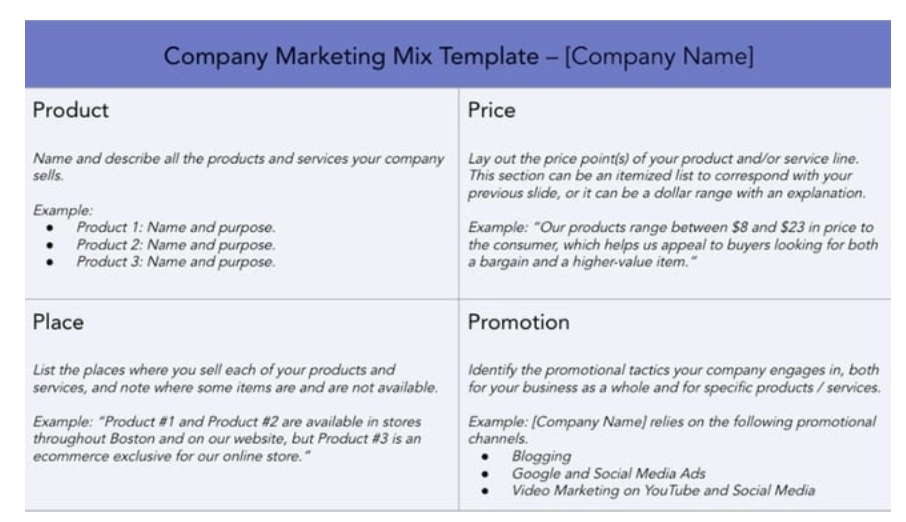
The marketing mix, also known as the four Ps of marketing, is the preliminary document you must create to understand what you will be marketing, where you’ll be marketing it, and how you’ll be marketing it. The following P’s make up this framework:
- Product: What are you selling?
- Price: What is the price?
- Place: Where will you be selling the product?
- Promotion: Where will you be promoting the product?
You can then extrapolate this information into a full-fledged marketing plan for each promotional channel. It’s important to lay out the information in broad strokes so that you understand the overall direction of your marketing strategy.
2. Marketing Objectives
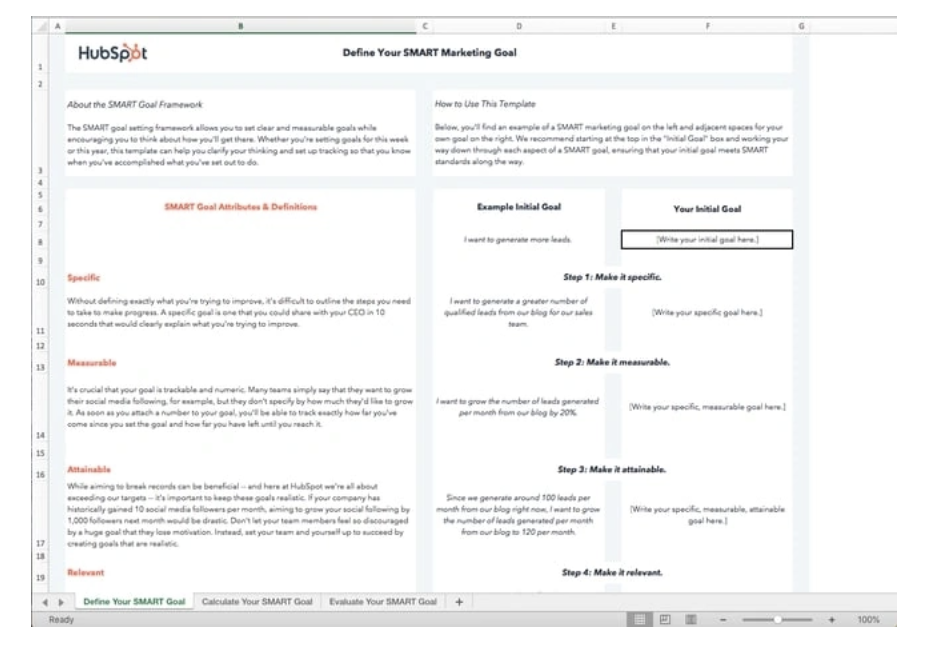
You can set your marketing objectives in conjunction with your four Ps, or right after. Either way, you should outline your marketing goals before building upon your strategy. Why? Because your goals will inform other components of the plan, including the budget and content creation process.
With every objective, you should aim to be as specific as possible. Try to create SMART marketing goals divided by channel or promotional tactic, and don’t forget that you can always come back and revise your goals as your priorities change.
3. Marketing Budget
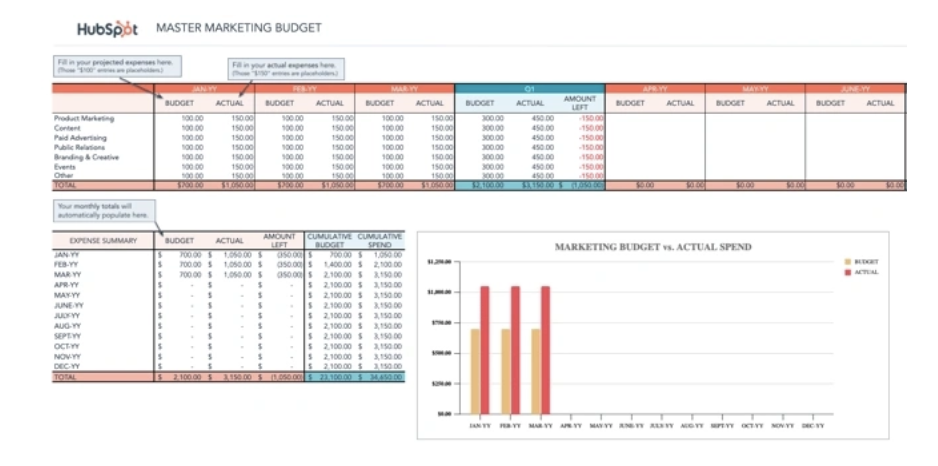
A marketing budget is an essential element of your strategy. Without allocating funds to hire the right talent, use the right software, advertise on the right channels, and create the right content, your marketing strategy won’t have a powerful impact. To get a high return on investment, you must first invest.
Remember that you can always start small — hyper-focusing your budget on one or two efforts — and build upon them once you generate an ROI.
4. Competitive Analysis
Knowing your competition is key when creating a marketing strategy. Otherwise, you risk “yelling into the void” without measurable results. Worse, you won’t know whether you’re differentiating yourself enough from the competition and effectively drawing the attention of your intended audience.
You might already have an idea of who your competitors are, but it’s still essential to sit down and find them. You might end up uncovering a surprise competitor who’s vying for your target buyer’s attention and engagement.
5. Segmentation, Targeting, and Positioning
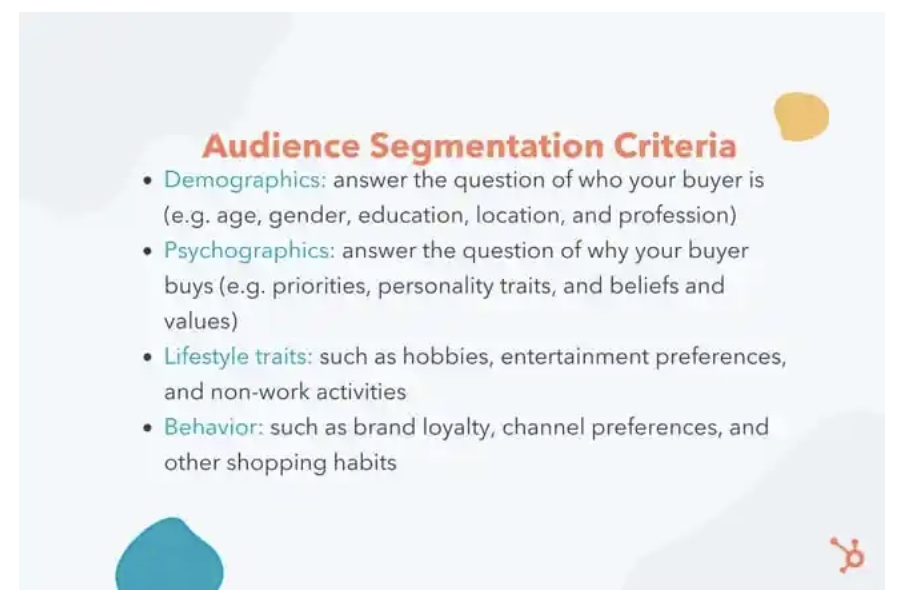
Segmentation, targeting, and positioning (STP) refers to the process of delivering “more relevant, personalized messages to target audiences.” In other words, rather than publishing posts and advertisements on a whim, you’ll go through a methodical process for creating content that resonates with your target buyer.
During the segmentation, targeting, and positioning process, you’ll take three steps:
- Identify your target audience. This process entails not only interviewing your current customers but also carrying out market research and creating buyer personas.
- Target a segment of your target audience. It’s best to speak to a narrow group of highly qualified buyers than to send your message out to everyone.
- Position your brand alongside other brands. What do you do better than your competitors? It’s essential to map this information when creating a marketing strategy.
6. Content Creation
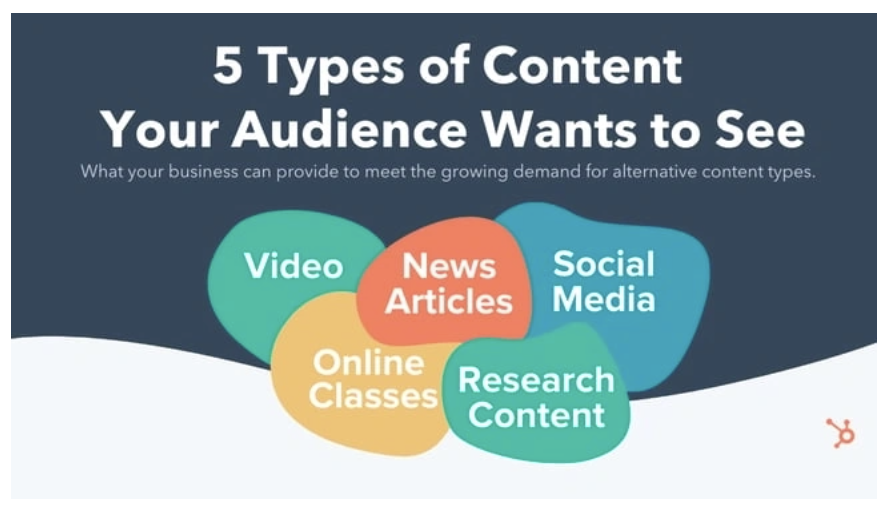
Once you have your budget, competitive outlook, and STP information, it’s time to create your marketing content. But it’s essential to be strategic. For one, you don’t want to publish random content that doesn’t solve for the customer, and for two, you must aim to capitalize on emerging trends so that your brand enjoys high visibility in the marketplace.
The competition is fierce across all formats. According to HubSpot Research, 44% of marketers use short-form videos as part of their content strategy, with 41% leveraging images, followed by 29% posting blog articles, long-form video (27%), and infographics and case studies (26% for each). Of these, video has the highest ROI.
It’s even more essential to invest in trends that have a high ROI, such as short-form video, influencer marketing, and social media DMs.
That doesn’t mean you shouldn’t invest in blogging, one of the most proven content marketing techniques. It’s simply important to know where to allot the most resources, especially if you have a limited budget.
7. Metrics & Key Performance Indicators (KPIs)
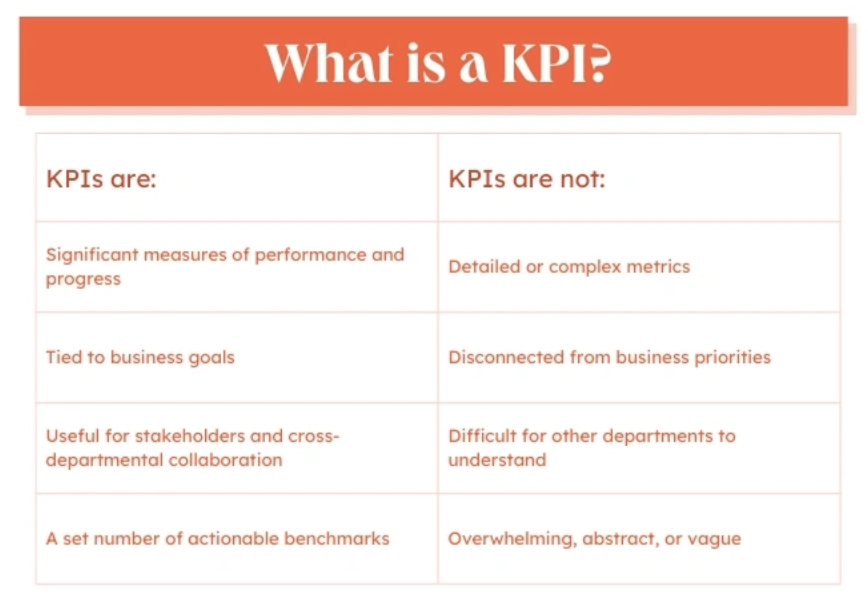
Last but certainly not least, your marketing strategy must include metrics and key performance indicators (KPIs) to understand how well your strategies are working. The KPIs you choose will vary depending on your business type and preferred customer acquisition channels. Examples of KPIs include:
Now, let’s dive into why it’s important to follow the steps of a marketing strategy.
Why is a marketing strategy important?
Without a defined strategy, you’ll essentially be throwing things at the wall to see what sticks. And that process will cost you money, time, and resources.
a robust marketing strategy will reach your target audience. It has the power to turn people who’ve never heard of your brand into loyal repeat customers.
Comments
Post a Comment